
Maintaining a vibrant and healthy lawn is the desire of every homeowner. One crucial aspect of proper lawn care is aeration.
By aerating your lawn, you can enhance its overall health and appearance, allowing it to thrive throughout the year. But when should you aerate your lawn?
In this comprehensive guide, Green T Services, a trusted lawn care company located in Aurora, IL, will provide valuable insights into the optimal timing for lawn aeration.
Whether you’re a homeowner in Aurora or a resident of the surrounding cities, understanding this essential lawn care practice will help you achieve a lush and beautiful turf.
What is Lawn Aeration?
Before diving into the frequency of lawn aeration, let’s first understand what it entails. Lawn aeration is a process that involves creating small holes in the soil to improve its overall health and vitality.
These holes facilitate the penetration of air, water, and essential nutrients into the root zone, encouraging strong root development. Aeration also helps alleviate soil compaction, which often occurs due to foot traffic, heavy machinery, or clay-based soil.
What signs should you watch out for?
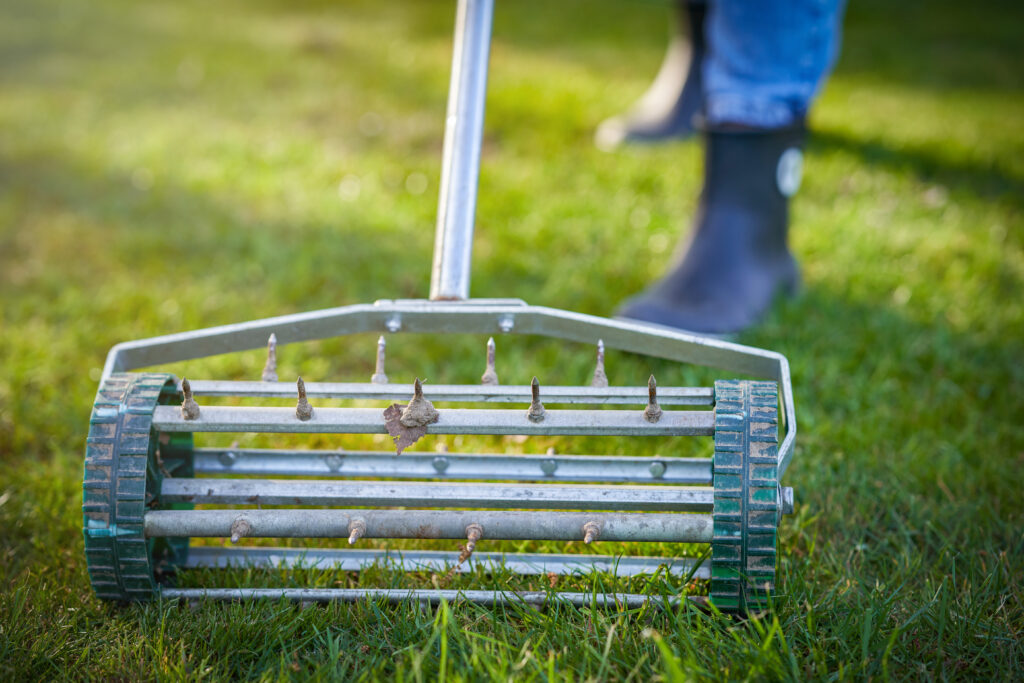
Determining the best time to aerate your lawn is crucial for maintaining its long-term health, vigor, and overall appearance. Several telltale signs can help you recognize when your lawn is in need of aeration. Here are some key indicators to watch for:
-
Frequent or heavy foot traffic: If your lawn regularly experiences high levels of foot traffic—whether from children playing, pets running around, or simply from regular outdoor activities—compaction can become an issue. Over time, this compresses the soil, limiting the space for grass roots to spread and grow deeply.
-
Compacted soil: Compacted soil can cause a variety of problems for your lawn. It essentially squeezes the root system, which leads to shallow root growth and hinders the ability of the grass to absorb essential nutrients, water, and oxygen. If you notice that the grass feels hard underfoot or doesn’t seem to bounce back after walking on it, this is a clear sign that the soil is compacted and in need of aeration.
-
Dry, brittle grass: If your lawn appears dry or brittle even after regular watering, it could indicate that the water is not penetrating the soil properly due to compaction. When the soil is too dense, water can’t reach the root zone where it’s needed most, causing your grass to look stressed and unhealthy despite your watering efforts.
-
Thatch buildup: A thick layer of thatch—made up of dead grass, roots, and organic debris—can be another sign that aeration is needed. When the layer of thatch becomes too thick, it creates a barrier that prevents water, nutrients, and air from reaching the soil. If you can see a noticeable buildup of this spongy material, your lawn may struggle to thrive and would benefit from the increased air circulation and soil loosening provided by aeration.
-
Poor drainage or water pooling: If you observe that water is pooling in certain areas of your yard after rainfall or watering, this could indicate that the soil has become too compacted to allow for proper drainage. Aeration will help break up the compacted soil, improving water absorption and preventing standing water, which can lead to other lawn issues such as fungal growth.
By staying vigilant and addressing these signs with timely aeration, you can significantly improve the health and resilience of your lawn. Regular aeration will allow your grass to develop deeper roots, absorb nutrients more effectively, and promote stronger, lusher growth regardless if its the hot or cool season.

When should you aerate your lawn? Ideal frequency for lawn aeration
The frequency of lawn aeration depends on various factors such as soil type, the type of aerator you have, lawn usage, and climatic conditions. As a general rule of thumb, it is recommended to aerate your lawn at least once a year. However, certain situations may warrant more frequent aeration.
- Clay or compacted soil: Lawns growing in clay or heavily compacted soil will benefit from aeration twice a year. Clay soil tends to retain water, making it prone to compaction. By aerating twice annually, you can improve drainage, root growth, and nutrient absorption.
- High-traffic areas: If your lawn experiences heavy foot traffic or regular use from children and pets, it is advisable to aerate those areas twice a year. Frequent aeration in high-traffic zones helps alleviate soil compaction, ensuring adequate oxygen and nutrient flow to the grassroots.
- Thatch buildup: Lawns with excessive thatch buildup may require more frequent aeration. Thatch is a layer of dead grass and organic debris that accumulates on the soil surface. When the thatch layer exceeds half an inch, it can hinder the movement of water, air, and nutrients. Aeration helps break down thatch and improves its decomposition rate.
Aeration plays a pivotal role in maintaining a healthy and robust lawn. By understanding the optimal frequency for lawn aeration, you can ensure your turf receives the necessary elements for growth, strength, and resilience.
Whether you’re a homeowner in Aurora, IL, or the surrounding areas, Green T Services is here to assist you with your lawn care needs.
Our team of experts can provide professional aeration services, tailored to your lawn’s specific requirements. Don’t overlook the significance of aeration in your lawn maintenance routine – unlock the secret to a lush and thriving turf with regular aeration!
By incorporating the recommended aeration frequency and seeking professional assistance when needed, you can enjoy the benefits of a beautiful, healthy, and envy-worthy lawn. Good luck and let us know how it goes!
Related:
Essential Yard Tools Every Homeowner in Aurora, IL Should Have
Category: Lawn Care